
What is SQLite?
SQLite – Overview
What is SQLite? In short, it’s a lightweight, serverless relational database engine trusted by millions of applications worldwide.
SQLite is a software library that provides a relational database management system. The lite in SQLite means light weight in terms of setup, database administration, and required resource.
SQLite, the world’s most used embedded database, powers everything from mobile apps to browsers.
SQLite is an in-process library that implements a self-contained, serverless, zero-configuration, transactional SQL database engine. The code for SQLite is in the public domain and is thus free for use for any purpose, commercial or private. SQLite is the most widely deployed database in the world with more applications than we can count, including several high-profile projects.
Is SQLite a Relational Database?
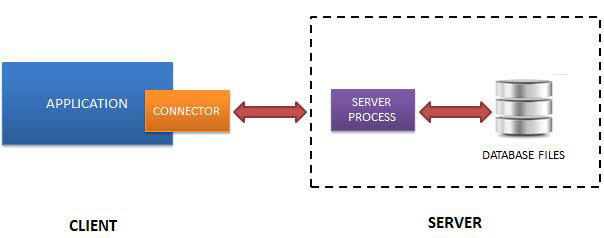
Yes, SQLite is a relational database. It stores data in tables made up of rows and columns, supports SQL queries, joins, indexes, and constraints, and follows the relational model the same way MySQL or PostgreSQL does. What makes SQLite different isn’t the data model. It’s the architecture: instead of running as a separate server process, the entire relational database engine is compiled directly into the application that uses it.
So when someone asks “is SQLite a relational database,” the short answer is yes, with one distinction worth remembering: it’s a relational database without a server. That’s what lets a single SQLite database to be a portable file rather than a service you connect to over a network.
SQLite Full Form: What Does “SQLite” Actually Mean?
A common search is “sqlite full form,” but SQLite isn’t a true acronym like RAM or HTML. The name combines two ideas. SQL is the query language SQLite uses to create tables, insert data, and run queries. Lite refers to how lightweight the engine is, in code size, setup effort, and resource use.
People also search this as “sql lite” or “sqllite,” but all three refer to the same database engine. There’s no separate product behind those spellings; they’re simply how the name gets typed or misremembered.
Why SQLite?
SQLite is ideal for small to medium applications that need a reliable relational database without server overhead.
- It can be very handy to use a database like storage when you have no access to a database service.
- SQLite is a public-domain software package that provides a relational database management system, or RDBMS. Relational database systems are used to store user-defined records in large tables. In addition to data storage and management, a database engine can process complex query commands that combine data from multiple tables to generate reports and data summaries. Other popular RDBMS products include Oracle Database, IBM’s DB2, and Microsoft’s SQL Server on the commercial side, with MySQL and PostgreSQL being popular open source products. The “Lite” in SQLite does not refer to its capabilities. Rather, SQLite is lightweight when it comes to setup complexity, administrative overhead, and resource usage
- SQLite does not require a separate server process or system to operate (serverless).
SQLite
- SQLite comes with zero-configuration, which means no setup or administration
needed. - A complete SQLite database is stored in a single cross-platform disk file.
- SQLite is very small and light weight, less than 400KiB fully configured or less than
250KiB with optional features omitted. - SQLite is self-contained, which means no external dependencies.
- SQLite transactions are fully ACID-compliant, allowing safe access from multiple
processes or threads.
These features make SQLite a top choice for developers building lightweight, portable, and fast applications.
What is SQLite Used For? (Real-World Use Cases)
Knowing what is SQLite in theory is one thing; what is SQLite used for in practice is a different, more practical question. Here’s where it shows up daily, often without users realizing it:
- Mobile apps: Android and iOS both ship with SQLite built in, and most apps that need local storage use it directly.
- Web browsers: Chrome, Firefox, and Safari all use SQLite internally to store browsing history, bookmarks, and cached data.
- Desktop software: apps that need to save user data locally, without asking anyone to install a database server, often build on SQLite.
- IoT and embedded devices: its small footprint makes it a natural fit for set-top boxes, routers, and other gadgets with limited resources.
- Testing and prototyping: developers frequently use SQLite in development and test environments before switching to a client-server database for production.
- Edge computing: applications that need to work offline or sync data later rely on SQLite’s file-based, serverless design.
This is also why SQLite database file formats show up across so many platforms: the same .sqlite or .db file works whether the app is on a phone, a desktop, or a Raspberry Pi.
SQLite vs MySQL vs PostgreSQL: Which Should You Use?
Once someone understands what is SQLite at a basic level, the next question is usually how it stacks up against the bigger databases. The sqlite vs mysql and sqlite vs postgresql comparisons come up constantly for teams choosing a database, and the honest answer is that they solve different problems.
|
SQLite |
MySQL |
PostgreSQL |
|
|
Architecture |
Serverless, embedded | Client-server | Client-server |
|
Setup |
Zero-configuration | Requires server install | Requires server install |
|
Best for |
Mobile apps, local storage, prototyping | Web apps, medium-to-large traffic | Complex queries, data integrity-heavy apps |
|
Concurrency |
Limited (one writer at a time) | Good | Very good |
| User management |
None (OS-level permissions only) |
Built-in |
Built-in |
| Scalability | Not built for high concurrent writes | Scales well |
Scales well, handles complex data |
If an application only runs on one device and doesn’t need multiple users writing at once, SQLite database is usually the simpler, faster choice. Once an application needs to support many concurrent users or complex access control, it’s time to move to a full-stack development setup built around MySQL or PostgreSQL instead.
How to Install SQLite (Quick Start Guide)
For anyone wondering how to install SQLite, the process takes a few minutes on any major operating system.
- Download SQLite from the official SQLite website. Grab the precompiled binary for Windows, or use a package manager on macOS/Linux.
- Install it. On macOS and most Linux distributions, SQLite is often already installed. Otherwise:# macOS (Homebrew)
brew install sqlite# Ubuntu/Debian
sudo apt install sqlite3 - Verify the install by running
sqlite3 --versionin a terminal. - Create your first database:
sqlite3 mydatabase.db
CREATE TABLE users (id INTEGER PRIMARY KEY, name TEXT, email TEXT);
That’s the entire setup. There’s no server to configure, no ports to open, and no admin accounts to create. It’s the core reason SQLite database is often the first database developers learn.
Using SQLite with Python
Python sqlite support is built into the standard library, so no installation is needed to start experimenting. This is one of the most common ways developers first encounter SQLite:
import sqlite3
# Connect to (or create) a database file
conn = sqlite3.connect(“mydatabase.db”)
cursor = conn.cursor()
# Create a table
cursor.execute(“CREATE TABLE IF NOT EXISTS users (id INTEGER PRIMARY KEY, name TEXT)”)
# Insert and query data
cursor.execute(“INSERT INTO users (name) VALUES (?)”, (“Sam”,))
conn.commit()
cursor.execute(“SELECT * FROM users”)
print(cursor.fetchall())
conn.close()
Because sqlite python needs no separate server, it’s a common choice for scripts, local tools, and early-stage products. Teams that outgrow it usually migrate the same schema to MySQL or PostgreSQL once they need a web application that supports multiple concurrent users.
SQLite Data Types
SQLite data types work differently from most relational databases. Instead of a fixed type per column, SQLite uses dynamic typing, called type affinity, where a column stores a preferred type but can technically hold any value. There are five storage classes:
- INTEGER for whole numbers
- REAL for floating-point numbers
- TEXT for strings
- BLOB for raw binary data, stored exactly as it’s entered
- NULL for missing or unknown values
This flexibility is convenient for fast prototyping, but it also means SQLite doesn’t enforce strict type checking the way MySQL or PostgreSQL does by default. Teams that need strict schema validation usually add it at the application layer.
Advantages
SQLite’s ease of use and zero-configuration setup make it the go-to relational database for embedded systems.
- Small footprint: As its name implies, the SQLite library is very lightweight. Although
the space it uses varies depending on the system where it’s installed, it can take up
less than 600KiB of space. Additionally, it’s fully self-contained, meaning there aren’t
any external dependencies you have to install on your system for SQLite to work. - User-friendly: SQLite is sometimes described as a “zero-configuration” database
that’s ready for use out of the box. SQLite doesn’t run as a server process, which
means that it never needs to be stopped, started, or restarted and doesn’t come
with any configuration files that need to be managed. These features help to
streamline the path from installing SQLite to integrating it with an application. - Portable: Unlike other database management systems, which typically store data as
a large batch of separate files, an entire SQLite database is stored in a single file. This
file can be located anywhere in a directory hierarchy, and can be shared via
removable media or file transfer protocol.
Disadvantages
Despite these limitations, SQLite remains the most widely deployed database engine across all platforms globally.
- Limited concurrency: Although multiple processes can access and query an SQLite
database at the same time, only one process can make changes to the database at
any given time. This means SQLite supports greater concurrency than most other
embedded database management systems, but not as much as client/server
RDBMSs like MySQL or PostgreSQL. - No user management: Database systems often come with support for users, or
managed connections with predefined access privileges to the database and tables.
Because SQLite reads and writes directly to an ordinary disk file, the only applicable
access permissions are the typical access permissions of the underlying operating
system. This makes SQLite a poor choice for applications that require multiple users
with special access permissions. - Security: A database engine that uses a server can, in some instances, provide better
protection from bugs in the client application than a serverless database like SQLite.
For example, stray pointers in a client cannot corrupt memory on the server. Also,
because a server is a single persistent process, a client-server database cancontrol
Whether you’re a beginner or an expert, SQLite offers a simple yet powerful SQL database solution for all.
Choosing the right database is just one piece of a bigger technology decision. For a broader look at how businesses are modernizing their stack, read Advanced Digital Solutions for Future-Ready Businesses on C-Metric’s Medium publication.
Frequently Asked Questions
Q1. Is SQLite free to use?
Yes. The SQLite source code is in the public domain, so it’s free for any use, commercial or personal, with no licensing fees.
Q2. Is SQLite a relational database?
Yes. It supports tables, SQL queries, and ACID transactions like any relational database. It just runs without a separate server process.
Q3. What is SQLite database used for?
Mostly local, embedded, and single-user storage: mobile apps, browsers, desktop software, and prototyping, as covered above.
Q4. What is SQLite short for?
It isn’t short for anything official. See the “SQLite Full Form” section above for the SQL plus Lite breakdown.
Q5. What is the full form of SQLite?
SQLite isn’t an acronym. The name combines “SQL,” the query language it uses, with “Lite,” referring to its lightweight setup and footprint.
Q6. Is SQLite good for production apps?
It depends on the use case. SQLite database works well in production for apps with a single user or light concurrent access, like mobile apps. For applications with many concurrent users, a client-server database like MySQL or PostgreSQL is the better production choice.
Need help deciding whether SQLite fits your project, or planning a move to MySQL or PostgreSQL as you scale? Get in touch with C-Metric’s development team for a free consultation.
Blog: by Disha Raval