
Security Testing in Modern Software Applications
Executive Summary
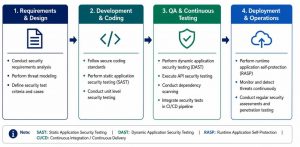
In today’s connected digital world, security testing is no longer something that is done only before a product is released. It has become an essential part of the entire software testing and development process. As modern applications continue to grow, they handle valuable information such as login credentials, financial records, business data, and Personally Identifiable Information (PII). Because of this, building strong security into the application from the beginning is a necessity rather than an optional feature.
Skipping security testing before deployment can expose an application to serious risks. Attackers continuously look for weaknesses in software that they can use to gain unauthorized access or misuse sensitive information. A successful attack can result in financial losses, damage to an organization’s reputation, and penalties for failing to meet security and privacy regulations.
Performing security testing early helps identify these weaknesses before the application reaches production, reducing risk and improving the overall reliability and safety of the software.
Defining Security Testing
Security testing is the process of checking an application for security weaknesses that could be used by attackers. Its main goal is to identify vulnerabilities, security gaps, configuration issues, and design flaws before the application is released. Unlike functional testing, which verifies
whether the application’s features work as expected, security testing focuses on protecting the application, its data, and its users from unauthorized access and cyber threats.
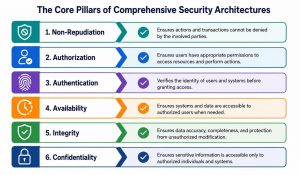
A good security testing process ensures that only authorized users can access the application and its data. It verifies that sensitive information remains confidential, user actions can be tracked when required, and data cannot be modified by unauthorized users. It also checks whether the application can resist common attacks and continue to operate securely even when someone tries to misuse or exploit it. Protect your business from cyber threats with our comprehensive Security Testing Services designed to identify vulnerabilities before attackers do.
Why Security Verification is Important
Security verification helps ensure that an application is safe, reliable, and protected from security threats. It offers several important benefits:
- Protects Sensitive Data: Keeps confidential business information and customer data safe from unauthorized access or theft.
- Prevents Unauthorized Access: Ensures that only authorized users can access the application, databases, and internal systems, while blocking attackers from gaining entry.
- Reduces Security Risks: Identifies and fixes security weaknesses early, reducing the chances of cyberattacks and data breaches.
- Supports Regulatory Compliance: Helps organizations follow security and privacy regulations such as GDPR (General Data Protection Regulation), HIPAA (Health Insurance Portability and Accountability Act), and PCI-DSS (Payment Card Industry Data Security Standard), reducing the risk of legal and financial penalties.
- Builds Customer Trust: Strong security practices increase customer confidence, protect the organization’s reputation, and encourage long-term user trust.
Core Methodologies of Security Testing
Security testing uses different methods to identify and fix security weaknesses in an application. Instead of relying on a single test, multiple testing techniques are combined to provide better protection. This layered approach helps reduce security risks and makes the application more resistant to cyberattacks.
-
Vulnerability Assessment
This process identifies known security weaknesses in an application, server, or network. It uses both manual reviews and automated security tools to detect potential risks so they can be fixed before attackers take advantage of them
-
Penetration Testing
Penetration testing, also known as ethical hacking, simulates real-world cyberattacks to check whether an attacker can gain unauthorized access to the application. It helps evaluate how well the application’s security controls can withstand actual attack attempts.
-
Authentication Testing
Authentication testing verifies that the login process is secure. It checks whether users can log in safely, passwords are protected, sessions are managed correctly, and the application can prevent unauthorized login attempts such as brute-force attacks.
-
Authorization Testing
Authorization testing ensures that users can access only the features and data they are permitted to use. It verifies user roles and permissions to prevent unauthorized access or privilege escalation.
-
Data Encryption and Protection Testing
This testing verifies that sensitive information is protected while it is stored and while it is being transferred over a network. It checks whether strong encryption methods are used to keep data secure from unauthorized access.
Artificial Intelligence in modern applications demands security testing that catches AI-specific risks, not just traditional vulnerabilities.
Deep Analysis of Common Application Vulnerabilities
1. SQL Injection (SQLI) What is SQL Injection?
SQL Injection is a security vulnerability that occurs when an application accepts user input without proper validation and directly uses it in database queries. An attacker can enter specially crafted input to change the database query and access or modify data without permission.
Impact
- Unauthorized login without valid credentials Test
- Access to confidential information test
- Modification or deletion of database records
- Loss of important business data
How to Prevent It
- Use parameterized queries or prepared
- Validate and sanitize all user
- Avoid creating SQL queries by directly combining user
- Give database users only the permissions they
Example
Suppose a login page asks for a username and password. Instead of entering a normal username, an attacker enters:
‘OR ‘1’=’1
If the application is not secure, the database may treat this input as a valid condition and allow the attacker to log in without knowing the correct password.
2. Cross-Site Scripting (XSS)
What is Cross-Site Scripting?
Cross-Site Scripting (XSS) happens when an application displays user input without checking or filtering it properly. An attacker can insert malicious JavaScript code, which runs in another user’s browser.
Impact
- Theft of user session cookies
- Account hijacking
- Display of fake or misleading content
- Collection of sensitive user information
How to prevent it
- Validate and filter all users input
- Encode output before displaying it on a web page
- Use a Content Security Policy (CSP).
- Collection of sensitive user information
- Keep applications and libraries updated
Example
A website where users can post comments. An attacker posts a comment containing harmful JavaScript code. When another user opens the page, the browser runs the script automatically, which may steal the user’s session information.
3. Broken Authentication and Session Management
What is It?
This vulnerability occurs when login or session management is not implemented securely. Weak session IDs, long session timeouts, or poor password protection can allow attackers to access user accounts.
Impact
- Unauthorized account access
- Session hijacking
- Identity theft
- Increased risk of brute-force attacks
How to Prevent It
- Enable Multi-Factor Authentication
- Use secure and randomly generated session
- Set session expiration after a period of
- Limit repeated failed login
- Always use HTTPS to protect user
4. Insecure APIs
What are Insecure APIs?
Applications often use APIs to exchange data between systems. If an API does not properly verify user identity or permissions, attackers may access, update, or delete information that they should not be able to access.
Impact
- Unauthorized access to sensitive data
- Data modification or deletion
- Exposure of confidential business information
- Increased security risks across connected systems
How to Prevent It
- Authenticate every API request
- Check user permissions before providing
- Use secure authentication methods such as OAuth(Open Authorization) or JWT(JSON Web Token)
- Apply rate limiting to prevent
- Validate all input received through
5. Weak Password Policies
What are Weak Password Policies?
Allowing users to create simple or common passwords makes it easier for attackers to guess
passwords using automated tools or dictionary attacks.
Impact
- User accounts can be compromised
- Sensitive business information may be
- Unauthorized users may gain access to the
How to Prevent It
- Require strong password with a combination of uppercase letters, lowercase letters numbers, and special characters.
- Encourage passwords with at least 12
- Enable Multi-Factor Authentication
- Prevent users from using common or previously compromised
- Encourage users to change passwords if there is a suspected security
Industry-Standard Security Engineering Toolkit
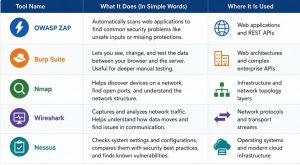
A mature security assurance blueprint couples rapid automated analysis platforms with deep, high-precision manual proxy engineering tools:
The Strategic Value of QA Teams in Security Assurance
Today, software security is not just the responsibility of cybersecurity teams. Quality Assurance (QA) teams also play an important role in making applications more secure from the early stages of development.
QA engineers test applications from different angles to identify potential security issues before the software is released. They check whether user inputs are properly validated, test login and authentication features with different scenarios, verify that users can access only the data they are authorized to see, and ensure that sensitive information is transferred securely.
By including security-related test scenarios in their regular testing process and automated regression tests, QA teams can detect weaknesses much earlier. Finding these issues before the application reaches later testing stages helps developers fix problems quickly, reduces security risks and improves the overall quality and reliability of the software.
Challenges in Modern Security Engineering
Security testing has become more challenging as software systems continue to evolve. Some of the major challenges include:
- Changing Cyber Threats: Cyber attackers constantly develop new techniques to exploit security QA and security teams must stay updated with the latest threats and testing methods to identify potential risks.
- Fast Development Cycles: Many organizations release software frequently using CI/CD pipelines. While this speeds up development, it can reduce the time available for detailed security testing if security is not included throughout the development process.
- Complex Software Architecture: Modern applications often use micro services, cloud platforms, and multiple connected services. Although these technologies improve flexibility and scalability. Also they create more entry points that attackers may try to exploit. This makes security testing more important than ever.
SaaS App Security requires continuous testing and monitoring to protect sensitive customer data across cloud-based platforms.
Conclusion
Security testing is an essential part of software development. It helps identify and fix security weaknesses before an application is released, reducing the risk of cyberattacks and protecting sensitive information.
Investing in security testing not only safeguards customer data but also builds trust, improves software quality and helps organizations avoid costly security incidents. As technology continues to evolve, new security threats will continue to emerge. Therefore, security testing should be an ongoing practice throughout the software development lifecycle rather than a one-time activity. A strong security testing process enables organizations to deliver reliable, secure, and high-quality software that users can trust.